How Managed IT Helps Your Crew Stay Productive and Less Frustrated
Technology that fights you costs more than you think: in time, in crew frustration, and in jobs that fall behind.
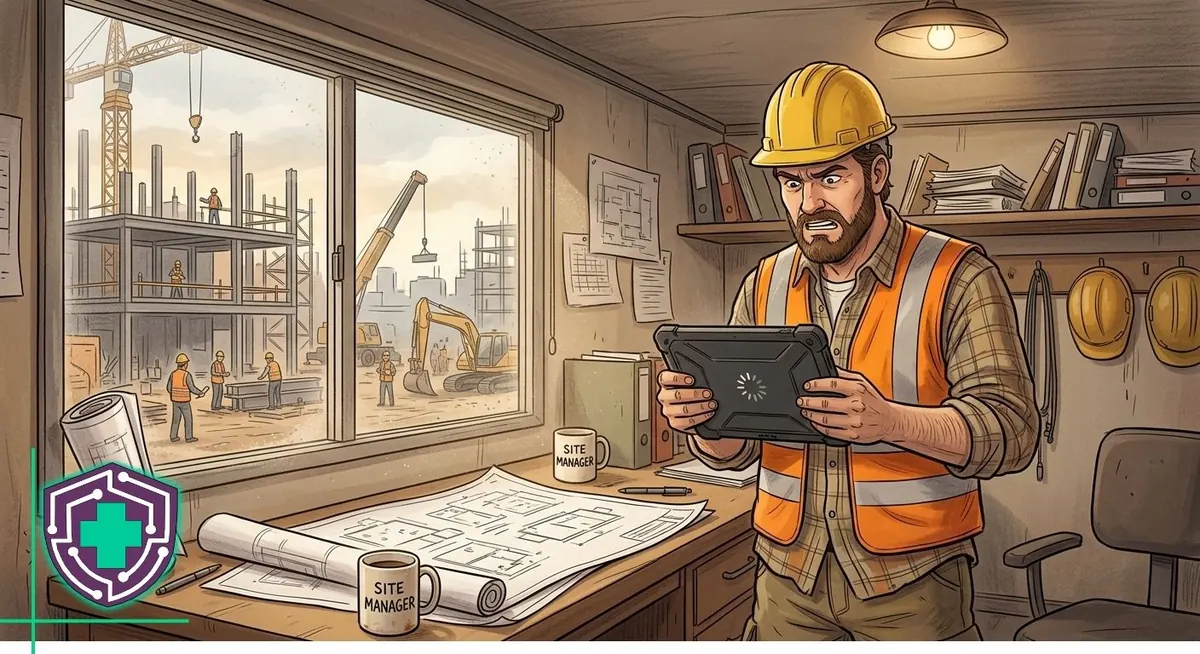
Think about the last time a piece of technology caused a problem on a job. Maybe the field tablet with the plans on it wouldn't connect. Maybe the estimating software timed out right before a deadline. Maybe someone couldn't reach the office because the VPN was down and nobody knew why.
How long did it take to sort out? And how many people stopped working while it did?
That's the cost most contractors never add up. It doesn't show up on a line item anywhere, but it's real, and it happens more often than it should.
The actual problem isn't the technology
Construction and trades businesses are running a lot of moving pieces at once. Multiple active job sites. Field crews on tablets or phones. An office doing estimates, billing, and scheduling. Equipment with telematics. Project management software, accounting software, maybe a CRM, often disconnected from each other, handled by different people, and held together with whatever workaround somebody figured out a few years ago.
None of that is a technology problem on its own. The problem is that nobody is actually managing it. It runs fine until something breaks, and when it breaks, the owner or the office admin ends up on the phone with a vendor trying to figure out what happened, while the job waits.
That's break-fix. It's the default for most construction and trades businesses in Western PA, and it's expensive in ways that are easy to underestimate.
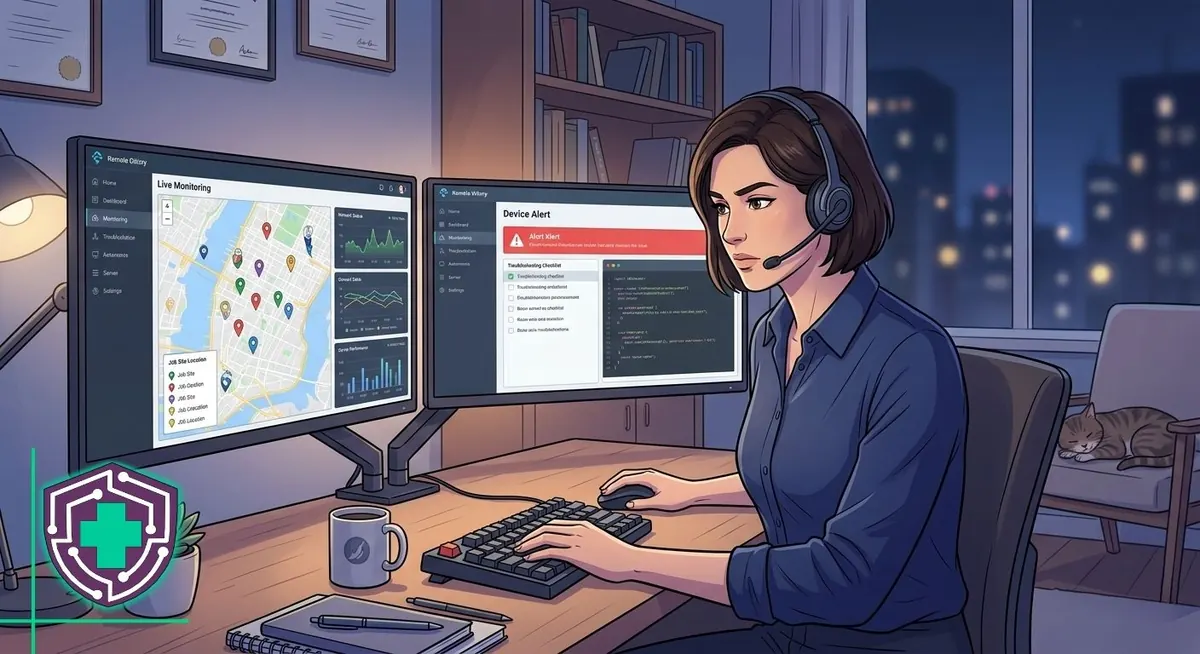
What managed IT actually changes for a construction business
When your IT is being actively managed (monitored, maintained, and supported by someone who knows your setup), a few things shift in ways that compound over time.
Problems get caught before your crew runs into them. Most device failures, network issues, and software conflicts give off warning signs before they become outages. With 24/7 monitoring, those signs get flagged and addressed. Your foreman doesn't find out the field laptop is failing when he needs the plans at 6am on a Monday; we find out three days before and deal with it quietly.
Your people spend less time dealing with IT and more time doing their jobs. This one is harder to measure but it's significant. Every time someone on your crew wastes 45 minutes troubleshooting a connection issue, that's 45 minutes not on the job. When your office admin is waiting on hold with a software vendor instead of processing invoices, that's real money. Managed IT removes most of that friction, not all of it, but most of it.
When something does go wrong, it gets resolved faster. Remote support means a tech can be in your device within minutes rather than hours. You're not waiting for someone to drive out. You're not losing half a day to a problem that takes 20 minutes to fix remotely.
For a construction business with 15 to 30 people across multiple sites, even a conservative estimate of two hours per week in tech-related friction across the team adds up to thousands of hours a year. Most businesses don't realize how much they're losing until it stops happening.
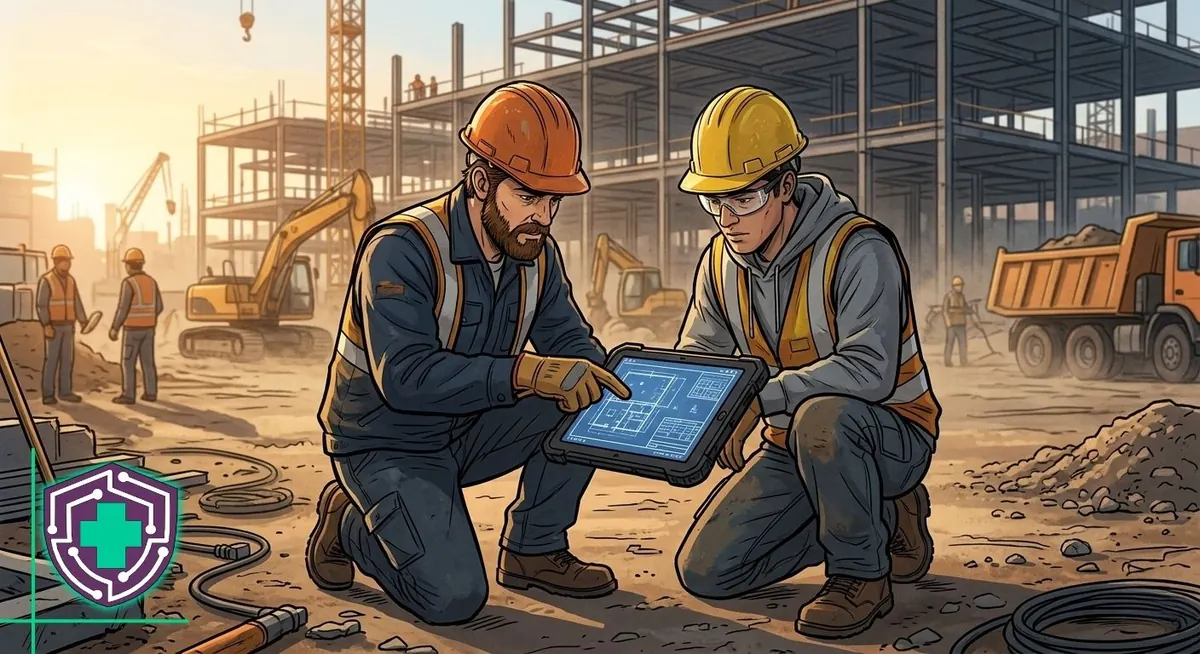
Field devices and job site connectivity are a different problem
Office IT and field IT are not the same thing, and a lot of general MSPs treat them like they are. That's where the gap usually shows up for construction businesses.
Your crew isn't working from a climate-controlled office with a stable ethernet connection. They're on job sites with inconsistent cellular coverage, tablets that get dropped and exposed to dust and weather, and equipment that may need telematics or OT connectivity that most IT providers have never dealt with.
Managing that environment requires knowing what you're looking at. Field devices need different endpoint policies than office machines. Job site connectivity requires different equipment and configurations than a standard business network. When those things are handled by someone who understands construction operations, your crew has reliable tools that work the way the job demands, not the way a generic IT setup assumes they will.
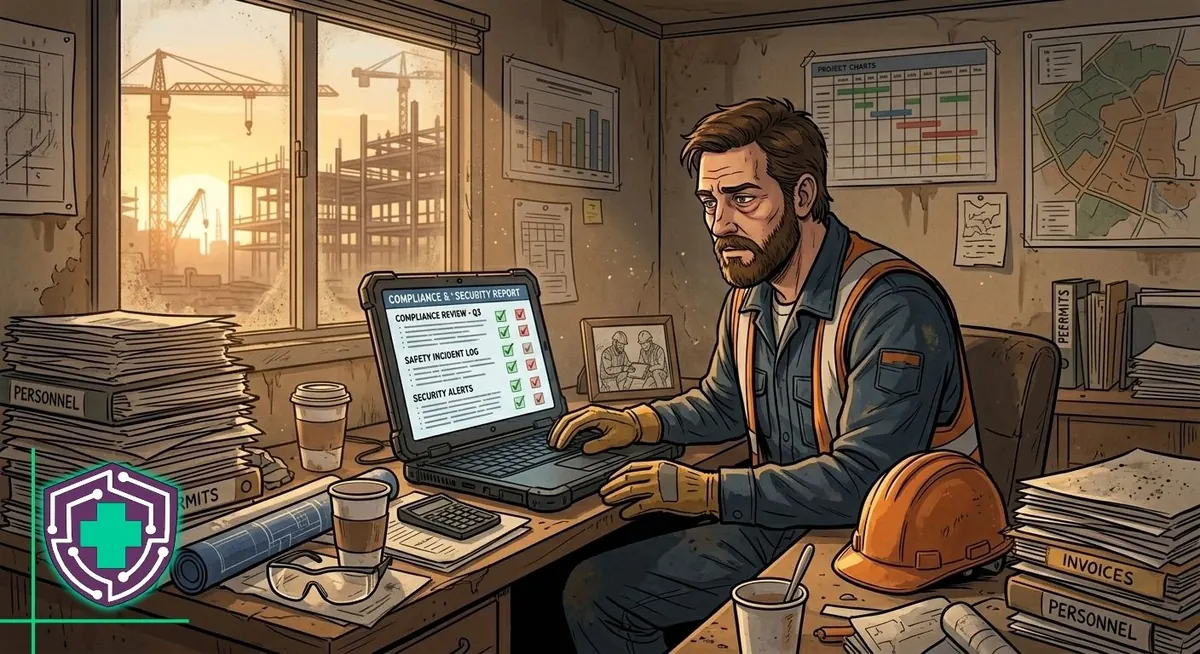
Security and compliance are tied to this too
General contractors and insurers are asking more questions about cybersecurity than they were a few years ago. Cyber insurance applications now include specific questions about your security controls, and some GC relationships, especially anything touching government or defense-adjacent work, are starting to require documented compliance postures.
That's not going away. And the businesses that handle it proactively are in a better position than the ones who get asked for documentation they don't have.
Managed IT addresses this as part of the service rather than as a separate project you have to fund on top of everything else. Endpoint protection, patch management, backup with verified restores, access controls: these aren't extras. They're part of what keeps your business protected and your GC relationships intact.
The frustration piece is worth naming directly
There's a version of this that's purely financial: downtime costs X, a managed IT provider costs Y, the math works. That's true and worth doing.
But there's also the frustration piece, which is harder to quantify and probably more important. Running a construction business is already stressful. Managing multiple sites, dealing with weather delays, keeping subcontractors coordinated, handling compliance, making sure the office is on top of billing: it's a lot. Technology that constantly creates problems is one more thing on top of all of that.
When IT works reliably and there's someone you can call who actually knows your setup and picks up the phone, that's one less thing to carry. For an owner working 10 to 14 hour days, that's not a small thing.
What to expect when you make the switch
The transition to managed IT isn't complicated, but it does take a conversation first. I want to understand your current setup (what you're running, where the pain points are, what your sites look like) before I tell you what makes sense for your business.
That's what the free technology assessment is for. It takes about 15 minutes, covers the areas that matter most for a construction or trades business, and gives you specific feedback on what's working, what's at risk, and what needs attention. No obligation, no pitch at the end, just an honest look at where you stand.
If what comes out of that conversation is that you don't need managed IT yet, I'll tell you that. If there's a real case for it, we can talk about what that looks like and whether the numbers make sense for your situation.
Ready to see where you stand?
Contact Us ›Don's Tech Rescue
Managed IT built for construction and trades
Proactive monitoring, field-ready support, and honest communication, delivered by someone who knows how your business actually operates.
Get in Touch ›